If we wouldn’t want it for our family, we wouldn’t ask you to use it near yours. We don’t formulate our products with these ingredients:
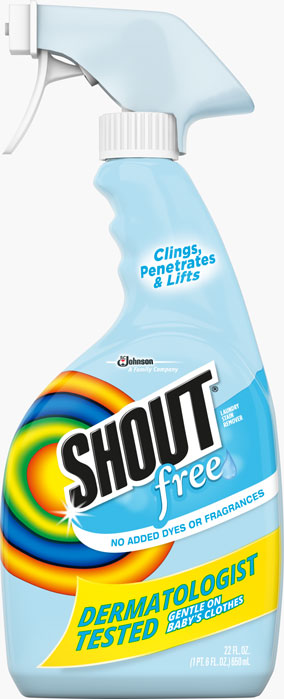
A 99% natural, effective stain remover that has no dyes or fragrances.
Break down dirt and deposits.
Lauryl Glucoside is a cleaning agent that can also be found in many personal care products including body washes, facial cleansers and bubble bath. It removes dirt and deposits by surrounding dirt particles to loosen them from the surface they're attached to, so they can be rinsed away.
Sodium Dodecylbenzene Sulfonate is a cleaning agent that is one of a group of ingredients commonly used in bath products, cleansing products, shampoos and hair conditioners. It removes dirt and deposits. In its liquid form, as we use it, it surrounds dirt particles to loosen them from the surface to which they are attached.
Enhance cleaning ability.
Citric acid is a builder that can also be found in a wide array of household products including laundry detergents, shampoos and cleaners. Of course, citric acid is also found in citrus fruits, such as oranges, lemons and limes. It makes a product formula clean better by affecting the molecules in the formula so they work together better. Citric Acid can also be used as a pH adjuster that alters the pH of a product to improve stability. Every formula has an optimum pH to make it work best. For example, a formula that’s more acidic works better for soap scum removal. Its opposite, a formula that’s more alkaline, might be more effective as a carpet cleaner. We use pH adjusters to make sure we achieve the best pH for a particular job. Also, the pH of a formula can affect how long it lasts within a container – for example limiting its tendency to rust in a can. Citric Acid can also be used as a cleaning agent that removes dirt.
Also known as Borax, Sodium Borate is a builder that has been used for decades in a wide variety of household products, such as creams, lotions, bath and skin products, among other things. It makes a product formula clean better by affecting the molecules in the formula so they work together better. Sodium Borate can also be used as a pH adjuster that alters the pH of a product to improve stability over time. Every formula has an optimum pH to make it work best. Also, the pH of a formula can affect how long it lasts within a container – for example limiting its tendency to rust in a can.
Adjusts the pH of a product to improve stability.
Sodium Hydroxide is a builder that can also be found in detergents and degreasers. It makes a product formula clean better by affecting the molecules in the formula so they work together better. Sodium Hydroxide can also be a pH adjuster that alters the pH of a product to improve stability. Every formula has an optimum pH to make it work best. For example, a formula that’s more acidic works better for soap scum removal. Its opposite, a formula that’s more alkaline, might be more effective at removing grease or greasy soils. We use pH adjusters to make sure we achieve the best pH for a particular job. Also, the pH of a formula can affect how long it lasts within a container – for example limiting its tendency to rust in a can. In high concentrations (such as in drain cleaners), Sodium Hydroxide can also be used as a caustic that helps dissolve organic matter like drain clogs.
Breaks down stains and clogs.
Subtilisin is an enzyme that breaks down stains. It can also be found in various household products such as laundry detergents and contact lens cleaners. Enzymes are proteins that catalyze or increase the speed and efficiency of chemical reactions.
Protects a product against microbial growth to maintain performance.
Benzoisothiazolinone is a preservative. It helps maintain product quality and performance over time. Some people raise concerns about preservatives, because a small number of individuals have allergies to them just as some people have allergies to nuts or bees. But preservatives play a very important role in food, cosmetics and household products. Without preservatives, many products would not last more than a week or two before being contaminated by bacteria, mold or yeast. So, we feel the best choice is to add preservatives in the smallest effective quantity to protect our products, but to list these preservatives in our formulas so that those with allergies in the family can make informed choices.