If we wouldn’t want it for our family, we wouldn’t ask you to use it near yours. We don’t formulate our products with these ingredients:
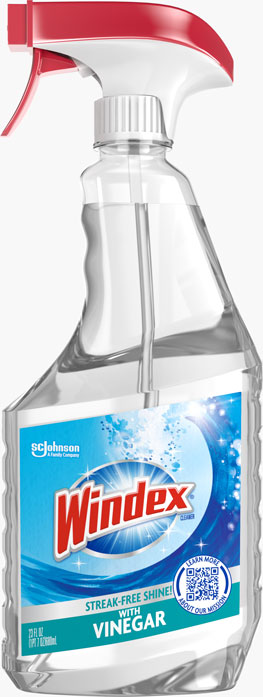
An ammonia-free cleaner that gently cleans countertops, appliances, glass and more to a streak-free shine.
Enable the delivery of the product to a surface.
Isopropyl Alcohol is a cleaning agent that can also be found in cosmetics and personal care products including eye makeup, lotions, soaps and hair care products. It is also the main ingredient in common household rubbing alcohol. It removes dirt and deposits by surrounding dirt particles to loosen them from the surface they're attached to, so they can be rinsed away. Then, it evaporates quickly.
Propylene Glycol is a solubilizer that can also be found in cosmetics, toothpaste, food and beer. It helps ensure even distribution of the ingredients throughout a product, to help it work better. It also can be used as an odor eliminator, as a cleaning agent that removes dirt, or as a carrier that enables delivery of the product to the surface. Propylene Glycol is sometimes confused with Ethylene Glycol, the sweet-tasting ingredient that can be used in air conditioning systems and antifreeze products, but it is a different ingredient and is not identified by any government regulatory agencies as a concern.
Break down dirt and deposits.
2-Hexoxyethanol is a cleaning agent that removes dirt and deposits. It does this by surrounding dirt particles to loosen them from the surface they're attached to, so they can be rinsed away.
Acetic Acid is found in vinegar and is in foods like salad dressing and pickles. It is what gives vinegar its pungent smell and sour taste, and has been used in homes for more than 10,000 years. Although our acetic acid isn't safe to eat, it is used as a cleaning agent that removes dirt and soils, and also as a pH adjuster that alters the pH of a product to improve stability. Every formula has an optimum pH to make it work best. For example, a formula that’s more acidic works better for soap scum removal. Its opposite, a formula that’s more alkaline, might be more effective at removing grease or greasy soils. We use pH adjusters to make sure we achieve the best pH for a particular job. Also, the pH of a formula can affect how long it lasts within a container – for example limiting its tendency to corrode an aluminum or steel can.
Ethanolamine (MEA) is a cleaning agent that can also be found in cosmetics. It removes dirt and deposits by helping to dissolve greasy soils. It also can be used as a pH adjuster that alters the pH of a product so it will be more compatible with the container in which it is packaged. The pH of a formula can affect how long it lasts within a container, for example limiting its tendency to corrode an aluminum or steel can. You might have heard that Ethanolamine, which is also known as MEA, was associated in a study a few years back with occupational asthma. But that claim is unfounded. Both SC Johnson and government agencies have reviewed MEA and there is no clinical evidence to indicate that it causes asthma. Additionally, MEA is a common substance in the environment and in fact is created by our own bodies -- it's essential in forming the membranes that make up our cell walls. For these reasons, we continue to believe it is acceptable for use, and importantly it’s a key ingredient that helps our products give the performance you expect.
Polyquart® Ampho 149 is a trademarked cleaning agent that can be found in a variety of household cleaning products. It removes dirt and deposits by surrounding dirt particles to loosen them from the surface they're attached to, so they can be rinsed away. Polyquart® Ampho 149 is a registered trademark of Cognis GmbH.
Helps a formula spread across a surface, making cleaning more efficient.
Disodium Cocoamphodipropionate is a cleaning agent that can also be found in skin soaps, lotions and shampoos. It removes dirt by helping water to mix with dirt and oils so they can be rinsed away. Disodium Cocoamphodipropionate can also be used as a wetting agent that helps a formula spread across a surface, making cleaning more efficient. It is made from fatty acids from coconut oil, also called coconut acid.
Click here to learn more about our fragrance palette.